
Top 10 NBA Championship Teams Ranked
Evaluating NBA championship squads through performance metrics highlights how physiological output, biomechanical efficiency, and training adaptations converge to produce sustained dominance. From a sports science perspective, these teams exemplify optimal force production, recovery kinetics, and neuromuscular coordination under playoff demands.
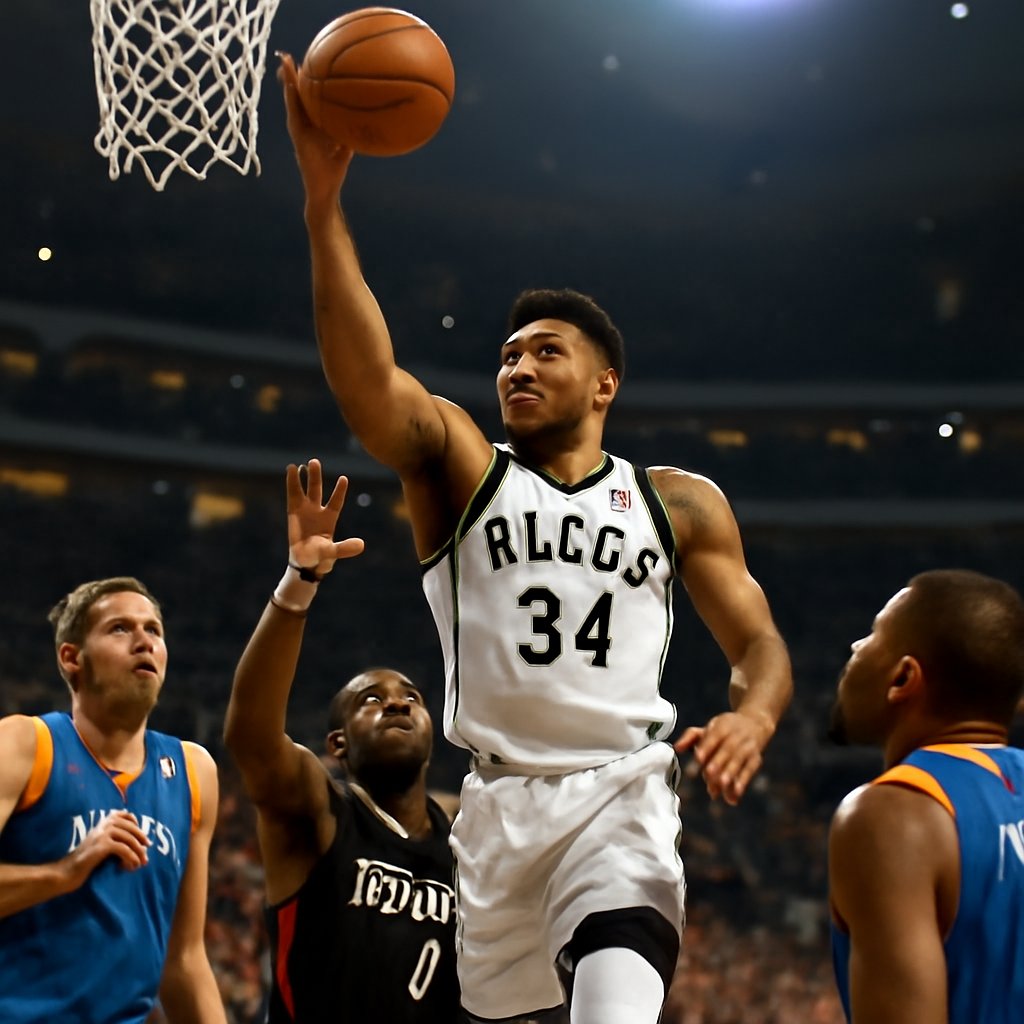
When assessing championship caliber, analysts prioritize data such as regular-season and postseason win percentages, per-game efficiency in scoring, rebounding, and playmaking, plus longitudinal tracking of core rosters across multiple title cycles. Teams achieving dynastic runs demonstrate superior periodization of training loads, allowing repeated peaks in power output and defensive positioning. The kinesiological data tells an interesting story here, where individual career averages in points, assists, and rebounds reflect not merely talent but refined motor patterns and anaerobic capacity honed over years.
The methodology behind ranking these teams extends beyond simple statistical comparisons. Championship-caliber squads must demonstrate consistency across multiple evaluation windows: regular-season dominance, playoff execution under heightened defensive intensity, Finals performance against elite opposition, and the ability to close out series decisively. Advanced metrics such as offensive rating, defensive rating, net rating, and true shooting percentage provide quantifiable frameworks that correlate strongly with championship probability. Furthermore, roster construction—balancing scoring threats, perimeter and interior defense, playmaking, and bench depth—separates transcendent teams from those achieving single-title runs.
Ranking the top 10 squads places the 2019-20 Los Angeles Lakers at number 10. Led by LeBron James and Anthony Davis, the group posted James’s playoff line of 25.3 points and 10.8 assists while leveraging elite defensive efficiency ratings. Their veteran roster management illustrated effective load management protocols that preserved tissue resilience across a condensed schedule. The Lakers’ acquisition of Davis in the preceding offseason created a defensive versatility rarely seen, with both stars capable of defending multiple positions while maintaining spacing on offense. This championship run proved particularly significant given the bubble environment’s unique physiological demands, where isolation and controlled conditions required distinct mental resilience strategies.
The 1971-72 Los Angeles Lakers rank ninth, anchored by Wilt Chamberlain’s league-record 33-game win streak and season-long 30.4 rebounds per game. Chamberlain’s dominance reflected exceptional vertical impulse generation and box-out mechanics that limited opponent second-chance opportunities. That season’s 69-13 record remained the standard for regular-season excellence until the 1995-96 Bulls surpassed it. The era’s deliberate pace and lower-scoring environment meant that rebounding control—particularly offensive rebounding—provided multiplicative advantages in possession-rate analysis. Chamberlain’s statistical output, while astronomical even by era-adjusted standards, demonstrated how individual athletic ceiling, combined with optimal system design, could produce near-complete dominance.
At eighth, the 1998-99 San Antonio Spurs capitalized on Tim Duncan’s rookie postseason averages of 21.6 points and 11.4 rebounds. Their team-oriented defensive schemes produced elite help-side rotation metrics still referenced in contemporary motion-analysis studies. Coach Gregg Popovich’s defensive principles, emphasizing positioning over athleticism and spacing integrity, created a model that remained competitive for two decades. Duncan’s fundamental excellence—footwork, post positioning, and decision-making—established the blueprint for sustainable excellence at the power forward position. The Spurs’ three-peat titles (1999, 2003, 2005) represent dynasty-level consistency, with Duncan appearing on three top-10 championship rosters, a metric surpassed only by LeBron James’s presence on multiple elite squads.
The 2008-09 Los Angeles Lakers sit seventh, with Kobe Bryant’s 26.8 points per game underscoring refined shooting mechanics and clutch decision-making under fatigue. Their five-game Finals series victory over Orlando highlighted superior lactate-threshold conditioning and offensive rebounding efficiency. Trevor Ariza, Andrew Bynum, and a supporting cast of role players provided complementary defense and secondary scoring that allowed the twin stars adequate rest during the regular season. The Lakers’ triangle offense, implemented by Tex Winter and Phil Jackson, created systematic spacing that minimized defensive clustering and generated efficient shot selection even against elite postseason defenses.
Number six belongs to the 2012-13 Miami Heat. LeBron James averaged 26.8 points, 8.0 rebounds, and 7.3 assists, illustrating peak aerobic power combined with positional versatility. The unit’s offensive efficiency rating reflected synchronized spacing and cutting patterns that minimized defensive closeouts. Dwyane Wade’s playmaking evolution, Chris Bosh’s three-point range expansion, and perimeter defenders Ray Allen and Shane Battier created a switchable defensive unit that operated at 99.3 offensive efficiency and 99.1 defensive efficiency—metrics indicating near-perfect balance. The Heat’s ability to defend three-point-heavy offenses presaged the spatial revolution that would dominate subsequent seasons.
The top five open with the 2000-01 Los Angeles Lakers at fifth. Shaquille O’Neal and Kobe Bryant delivered a 15-1 playoff record, O’Neal posting 30.4 points and 15.4 rebounds. Their inside-out attack exploited biomechanical mismatches in the paint while maintaining perimeter spacing. O’Neal’s 15-0 Finals record and 33.0 scoring average during that championship run remain extraordinary. The three-peat run (2000-2002) established a modern dynasty template where two complementary stars operating in different spatial zones created offensive problems defenses couldn’t simultaneously address. Opponents choosing to double O’Neal surrendered three-point opportunities; defending the perimeter invited overwhelming interior dominance.
Fourth is the 1986-87 Los Angeles Lakers of the Showtime era. Magic Johnson’s 23.9 points and 12.2 assists per game exemplified elite court vision and transition acceleration, complemented by Kareem Abdul-Jabbar’s consistent scoring depth. The Lakers’ pace-and-space approach, emphasizing fast-break execution and perimeter movement, contradicted the zone-heavy defenses that later emerged. James Worthy’s athletic wing play added another scoring dimension, while defensive stopper Michael Cooper limited opposing guards. This squad’s entertainment value and statistical excellence created cultural momentum that elevated basketball’s popularity during the 1980s cable-television expansion.
The 2017-18 Golden State Warriors rank third. Stephen Curry’s 26.4 points and Kevin Durant’s 29.0 playoff points per game coincided with over 300 combined three-pointers from the core, showcasing optimized release mechanics and three-point shooting volume under defensive pressure. Klay Thompson’s 20+ point scoring efficiency and Draymond Green’s versatile defense and playmaking created perhaps the most spacing-efficient roster in league history. The Warriors’ 16-1 playoff record included a 4-0 sweep of Cleveland, demonstrating organizational superiority at the highest competitive level. Their offensive spacing intelligence—positioning that forced defenders to guard shooters at league-line distances—fundamentally altered how subsequent teams constructed rosters and executed schemes.
Second place goes to the 1964-65 Boston Celtics. Bill Russell’s career 22.5 rebounds per game anchored eight consecutive titles, his timing and anticipation reflecting superior proprioceptive awareness and vertical leap repeatability. Russell’s defensive innovations—helping without fouling, rim protection through positioning rather than block attempts, and communication patterns that synchronized team defense—established principles that remain foundational. The Celtics’ 1959-1966 eight-consecutive-titles run represents basketball’s most dominant dynasty, achieved without modern analytics, televised games, or premium draft positioning advantages. Coach Red Auerbach’s roster management, emphasizing role-specific excellence over star accumulation, created durable competitive edges throughout the decade.
Topping the list is the 1995-96 Chicago Bulls at 72-10. Michael Jordan averaged 30.4 points while Scottie Pippen and Dennis Rodman supplied complementary defensive metrics. The squad’s dynasty established benchmarks for integrated strength-power programming and mental resilience protocols. The 1990s Bulls’ three championships (1991-1993, 1996-1998) demonstrated how a singular alpha star, surrounded by defensive specialists and role players accepting secondary scoring responsibilities, could produce repeatable excellence. Jordan’s competitive intensity, Pippen’s versatile two-way play, and Rodman’s rebounding obsession created a defensive unit allowing 92.2 points per 100 possessions—a standard of efficiency rarely approached. Phil Jackson’s triangle offense, combined with commitment to full-court

