
Michael Schumacher Formula One Championship Wins
Michael Schumacher’s seven Formula One drivers’ titles mark a defining case study in elite human performance under extreme physiological loads. His career arc from karting to seven-time champion illustrates how targeted neuromuscular training, cardiovascular conditioning, and precise biomechanical feedback loops can compound across two decades of competition.
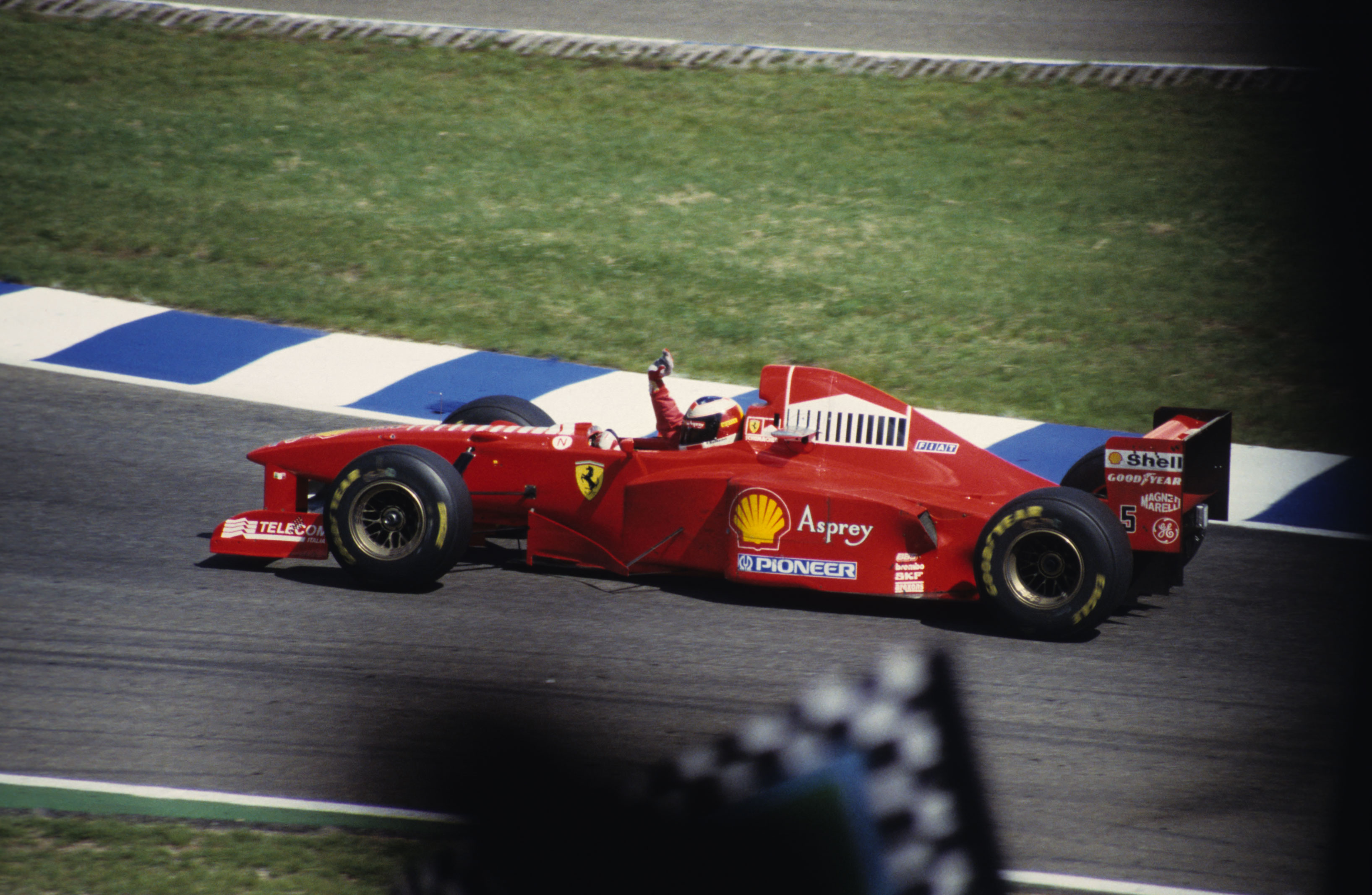
In the early phase, Schumacher progressed through junior categories with measurable gains in reaction time and spatial awareness. Entering Formula One via Jordan and then Benetton, he captured his first championship in 1994 through consistent top finishes and six victories despite mechanical constraints. The kinesiological data tells an interesting story here: his ability to modulate throttle inputs and steering inputs at the limit of tire adhesion reflected superior proprioceptive control honed through repetitive high-G cornering drills.
The 1994 season underscored these attributes when Schumacher secured the title by a single point over Damon Hill. From a sports science perspective, the Belgian Grand Prix win highlighted peak lactate threshold management, allowing sustained output across variable track conditions. The following year he defended the crown with nine victories, aided by refined tire-management protocols that reduced cumulative fatigue across race distances.
Schumacher’s dominance in the mid-1990s represented a paradigm shift in how Formula One teams approached driver development and performance optimization. His willingness to provide detailed telemetry feedback and work collaboratively with engineers established a new standard for driver-team integration. At Benetton, this partnership yielded innovations in real-time data analysis that competitors scrambled to emulate. The technical regulations of that era allowed for active suspension and traction control systems that rewarded drivers capable of exploiting marginal performance gains—precisely Schumacher’s forte. His ability to extract maximum pace from these complex systems while maintaining consistency across multiple race formats demonstrated cognitive agility beyond typical driver skill sets.
Transitioning to Ferrari in 1996 initiated a period of systematic team-level optimization. After initial adaptation challenges, Schumacher contributed to five straight drivers’ titles between 2000 and 2004 while the squad captured multiple constructors’ championships. Training physiology played a central role: his regimen emphasized neck and core strength to tolerate sustained lateral forces exceeding 5 G, paired with recovery modalities that preserved cognitive sharpness during qualifying and race stints.
The Ferrari years represented the apex of Schumacher’s influence on organizational culture and long-term performance planning. Upon arrival at Maranello in 1996, Ferrari faced structural challenges that had prevented championship success since 1983. Schumacher’s methodical approach to identifying bottlenecks—from pit crew efficiency to aerodynamic development protocols—catalyzed a transformation that extended beyond his individual performances. By establishing baseline performance metrics and systematic improvement targets, he helped Ferrari transition from a historically inconsistent outfit into a championship-winning operation. This organizational legacy arguably exceeds his statistical achievements, as it created institutional frameworks that persisted through subsequent eras.
The 2000 title ended Ferrari’s long drought with ten wins, followed by record point hauls in subsequent seasons thanks to chassis and aerodynamic refinements that rewarded precise driver inputs. By 2004 Schumacher posted 13 victories in one campaign, a metric that aligned with documented improvements in peak power output and visual processing speed. These results elevated both individual benchmarks and the sport’s global performance standards.
The 2004 season, in particular, showcased Schumacher’s peak competitive window. Securing thirteen wins from eighteen races, he accumulated 148 points—a record that stood until the sport’s point system expanded in 2010. The consistency was remarkable: he finished outside the podium positions in only four races all season. This level of dominance reflected not merely superior machinery, but rather Schumacher’s meticulous approach to managing tire degradation, fuel consumption, and brake temperatures across varying circuits. His engineers noted that he could detect minute changes in car balance that other drivers attributed to general setup preferences, allowing Ferrari to implement micro-adjustments that yielded tenths of a second per lap.
Beyond raw statistical output, Schumacher’s influence on safety culture within Formula One cannot be overlooked. Following his career-altering accident at the 1999 British Grand Prix—which resulted in a fractured leg that sidelined him for several races—he became increasingly vocal about circuit design and safety protocols. His advocacy during the late 1990s and 2000s contributed to discussions that eventually led to improved barrier systems, expanded run-off areas, and enhanced medical facilities at circuits worldwide. This dimension of his legacy extends into the sport’s infrastructure and demonstrates how elite athletes can drive systemic improvements beyond competition itself.
Later attempts at a Mercedes comeback from 2010 to 2012 occurred against evolving regulatory and generational variables, yet his accumulated experience still shaped development processes. Schumacher’s advocacy for enhanced safety measures translated into measurable reductions in incident severity through improved barrier design and medical response protocols. His work ethic also established a cultural template for teammate accountability that persisted within Ferrari’s operational model.
The competitive landscape had shifted considerably by the time Schumacher returned to active competition. The hybrid power unit regulations introduced in 2014 represented fundamental changes to energy recovery and thermal management that required extensive adaptation. Though Schumacher’s Mercedes tenure concluded before that era, his return demonstrated that even the sport’s greatest talents face inevitable generational obsolescence. This reality underscores how performance advantages compound through continuous competition rather than accumulated experience alone—a distinction crucial for understanding dominance in motorsport.
Key performance statistics include seven world championships in 1994, 1995, 2000, 2001, 2002, 2003, and 2004; 91 Grand Prix victories; 68 pole positions and 77 fastest laps across 308 starts; two constructors’ titles with Benetton plus five with Ferrari; five consecutive titles from 2000 to 2004; a single-season record of 13 wins in 2004; and induction into the FIA Hall of Fame. These numbers represent sustained excellence across nearly two decades while competing against evolving technical regulations and generational waves of competitors.
Schumacher’s trajectory from prodigy to seven-time champion supplies enduring reference points for resilience training, data-informed adaptation, and the integration of human physiology with engineered systems. His legacy encompasses not only individual championship titles but also systemic improvements to team operations, driver development protocols, and motorsport safety standards that continue influencing the sport today.

