
Facts About Wilt Chamberlain’s Scoring Records
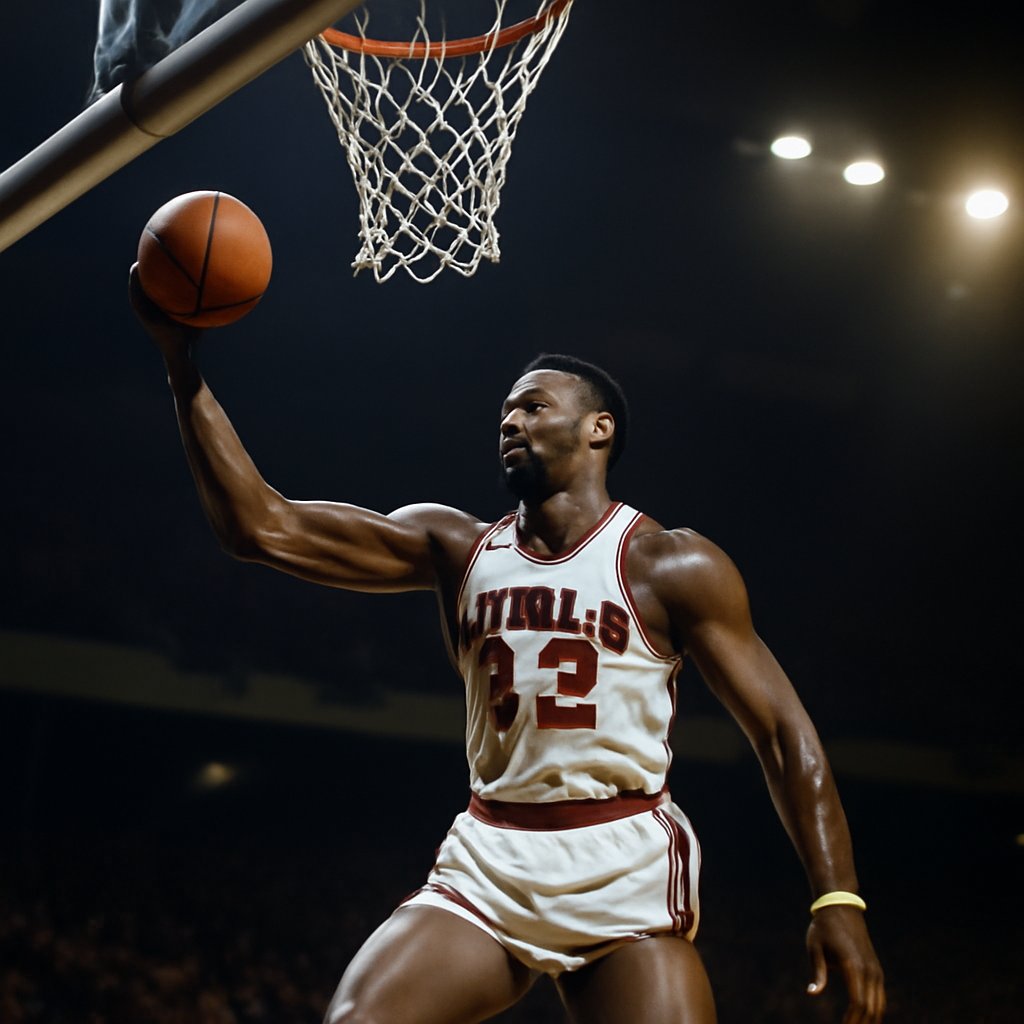
What the career arc of Wilt Chamberlain tells us is that dominance in any sport often arrives not as a sudden explosion but as the steady accumulation of physical gifts, relentless preparation, and an environment willing to let an outlier flourish. Having covered athletes across disciplines—from Indian cricketers chasing impossible seasonal aggregates to Olympic throwers rewriting national records—I see clear parallels in how individual brilliance can reshape expectations for an entire generation.
Chamberlain’s journey began with the raw advantage of his 7-foot-1 frame and uncommon agility, yet it was the 1961-62 season that crystallized his place in basketball lore. On March 2, 1962, playing for the Philadelphia Warriors against the New York Knicks in Hershey, Pennsylvania, he scored 100 points—still the NBA single-game record. He converted 36 of 63 field goals and 28 of 32 free throws before a modest crowd of roughly 4,000. Entering that night already on a heater with multiple 60-point games that season, Chamberlain forced the Knicks into early foul trouble, and his teammates began feeding him the ball in the fourth quarter to chase history.
That single-game masterpiece capped a campaign in which he averaged an unfathomable 50.4 points per game across 80 contests, the highest single-season mark ever recorded. He led the league in scoring for seven consecutive seasons from 1960 through 1966, with averages ranging from 37.6 to that peak of 50.4. In South Asian sports culture, where cricket fans still debate whether a batsman’s 50-plus average in a calendar year truly eclipses the team’s collective effort, Chamberlain’s numbers invite the same conversation: how much individual production can a sport absorb before rules and defenses adjust?
Opposing teams tried widening the lane and stacking defenses, yet he kept producing, logging a league-high 48 minutes per game while also topping the charts with 2,052 rebounds that same 1962 season. Official blocks were not tracked then, but contemporaries spoke of his shot-altering presence. Across 14 years he finished with 31,419 points at 30.1 points per game, and he posted at least 60 points in a game 32 times—an unmatched volume of high-scoring outbursts that included a 78-point night in 1961 and multiple 70-point games.
The Context Behind the Numbers
Understanding Chamberlain’s scoring records requires examining the basketball landscape of the late 1950s and early 1960s. The NBA was smaller then, with fewer teams and shorter benches, meaning that elite talent faced less sophisticated defensive schemes and fewer athletic specialists. The defensive three-second rule, which would later restrict how long a defender could camp in the paint, had not yet been implemented in its modern form. Additionally, the quality of officiating allowed for a more physical brand of basketball, though Chamberlain’s size and athleticism transcended these variables.
The pace of play was considerably faster than today’s game. Teams averaged higher possessions per contest, and Chamberlain’s conditioning allowed him to maintain elite production across the full 48 minutes. His teammates during the high-scoring years, players like Guy Rodgers and Tom Gola, were adept at orchestrating the offense to maximize opportunities for the dominant center. Yet this context does not diminish the achievement—rather, it frames it within its own era while establishing a baseline for comparison with modern standards.
Rebounding Excellence and Two-Way Impact
While Chamberlain’s scoring prowess dominates the historical narrative, his rebounding credentials deserve equal emphasis. In 1968-69, he led the NBA with 1,712 rebounds despite averaging fewer points. Over his career, he accumulated 23,924 rebounds—a figure that stands as the second-highest total in NBA history. His ability to dominate the glass on both ends of the floor meant that his impact extended well beyond the offensive statistics that made headlines.
Chamberlain led the league in rebounding for 11 consecutive seasons, an unprecedented streak of excellence that demonstrates his consistency over time. His rebounding prowess complemented his scoring because he was instrumental in generating second chances for his team. In the 1966-67 season with the 76ers, when he won his first championship, he averaged 24.1 points per game—significantly lower than his peak years—yet proved instrumental in Philadelphia’s defensive schemes and transition game. This willingness to adapt his game for team success foreshadowed the evolution that would define his later career.
The Legendary 100-Point Game: Breaking It Down
The March 2, 1962 performance deserves deeper analysis beyond the headline number. Chamberlain’s 100-point night was not merely a statistical anomaly but the product of systematic offensive design. The Warriors recognized that the Knicks, particularly defensive specialist Darrell Imhoff, were in foul trouble early. Rather than pursuing a balanced offensive approach, coach Frank McGuigan and his staff made a strategic decision to exploit this advantage by feeding Chamberlain repeatedly in the post.
In the fourth quarter alone, Chamberlain scored 28 points as his teammates essentially ran a one-man offense. His free-throw shooting that night—28 of 32—proves particularly instructive. While Chamberlain’s free-throw shooting was often criticized throughout his career (he finished at 51.1 percent for his lifetime), his touch improved when he focused on the mechanics. The fact that he connected on 87.5 percent of his free throws in that game underscores the narrative that Chamberlain’s limitations were often about consistency and approach rather than pure ability.
Scoring Streaks and the Frequency of 60-Point Nights
Chamberlain’s 32 games with 60 or more points represents a volume of elite performances that no modern player has approached. Michael Jordan, widely regarded as the greatest scorer in basketball history, reached 60 points only 10 times across his entire career. This disparity highlights both the different eras of play and Chamberlain’s singular focus on scoring production during his peak seasons.
Beyond the statistical records, Chamberlain’s 78-point performance against the Lakers in December 1961 occurred in a single overtime period for much of the game—a contextual detail that makes the achievement even more remarkable. His 73-point game against the Chicago Bulls and his 70-point outbursts established a pattern: when Chamberlain entered a rhythm offensively, defenses possessed limited tools to contain him. The evolution of defensive strategies, including zone defenses and the eventual adoption of the defensive three-second rule, were largely motivated by the need to counteract the dominance of players like Chamberlain.
What stands out when tracing the full arc, however, is the later pivot toward team success. Chamberlain captured NBA titles with the Philadelphia 76ers in 1967 and the Los Angeles Lakers in 1972, earning Finals MVP honors in the latter. The same athlete once viewed primarily through scoring lenses became the anchor for championship squads, a transition familiar to anyone who has watched Indian badminton stars or hockey veterans move from personal medal counts to mentoring collective campaigns.
In the 1966-67 season, Chamberlain’s maturation as a player became evident. Playing alongside Hal Greer, Chet Walker, and future Hall of Famer Billy Cunningham, Chamberlain adjusted his scoring load to fit the team’s needs. The 76ers’ suffocating defense, anchored by Chamberlain’s presence, helped them capture the championship with a 68-13 record—one of the best regular-season records in NBA history. Chamberlain averaged 24.1 points but added 24.2 rebounds and earned All-Defensive honors, showcasing his evolution from pure scorer to two-way force.
His 1972 championship with the Lakers at age 36 was equally impressive. Sharing the court with Jerry West and Elgin Baylor, Chamberlain proved that his skill set could complement elite teammates rather than require an entire offense built around him. That team’s dominance, winning 69 games, demonstrated that Chamberlain’s basketball intelligence had matured alongside his physical abilities.
Legacy and Modern Comparisons
Modern observers still wonder how these feats would translate under today’s spacing and athleticism, yet the raw durability and efficiency inside the paint remain benchmarks. Three-point shooting and modern defensive strategies would undoubtedly alter Chamberlain’s scoring average. Contemporary analytics suggest that if Chamberlain played today, his scoring might decline by 10-15 points per game due to defensive innovations and the emphasis on perimeter shooting. Yet his rebounding prowess and shot-blocking ability—even if unmeasured during his era—would likely remain elite.
Chamberlain’s story reminds us that records are not merely statistical peaks; they are

