
Facts About the NBA Three Point Record
The evolution of the NBA three-point record mirrors profound shifts in offensive architecture and player development protocols, where long-range precision now dictates spacing efficiencies and defensive rotations across professional basketball. Since the line’s introduction in the 1979-80 season, this shot has transitioned from experimental novelty to a core performance metric, reshaping everything from shot selection distributions to championship modeling.
From a sports science perspective, early benchmarks set by players like Chris Ford reflected limited biomechanical optimization compared to contemporary standards. Defenses prioritized paint protection, which constrained three-point volume and emphasized mid-range mechanics over the deep release angles seen today. The kinesiological data tells an interesting story here: brief adjustments to line distance in the 1990s temporarily altered joint loading patterns on the lower extremities before the standard distance returned, setting the stage for analytics-driven training that prioritizes release velocity and arc consistency.
Pioneers such as Reggie Miller accumulated 2,560 career makes through repetitive shooting drills that honed neuromuscular timing under fatigue, while Ray Allen reached 2,973 across multiple franchises. Their career trajectories highlight how dedicated focus on scapular stability and wrist pronation mechanics elevated the three-pointer from peripheral tool to decisive weapon in playoff series. Both players demonstrated remarkable longevity, with Miller’s clutch shooting in the playoffs earning legendary status through performances like his iconic 8-point sequence against the Knicks in the 1995 Eastern Conference Finals, while Allen’s smooth release remained consistent across 18 seasons and five different NBA teams.
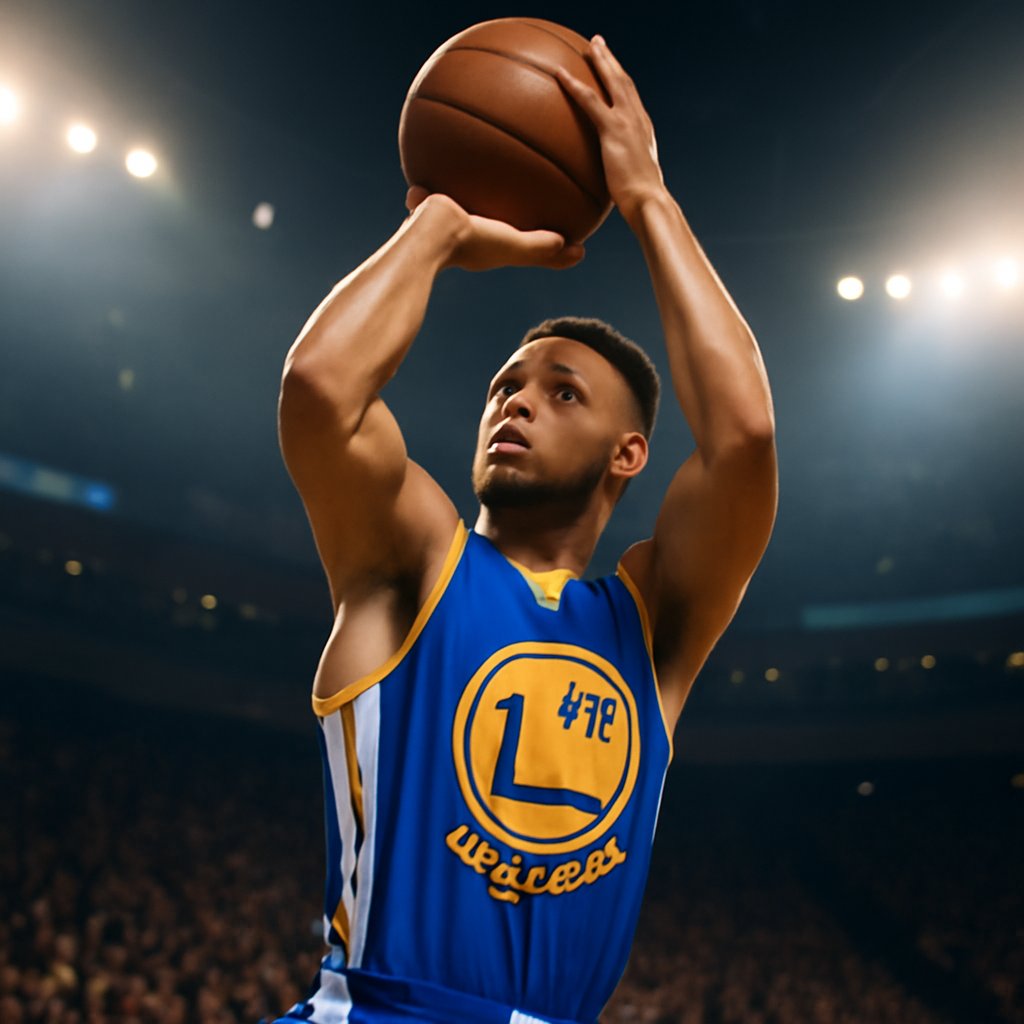
Stephen Curry’s ascent redefined these benchmarks, surpassing prior marks with 3,747 career three-pointers. Drafted in 2009, he navigated chronic ankle instability through targeted proprioceptive training and load management strategies that preserved shooting efficiency. His 2015-16 single-season total of 402 makes coincided with peak physiological output, driving a 73-win campaign via off-dribble mechanics that demanded rapid force generation from the posterior chain. The Warriors’ subsequent titles in 2015, 2017, 2018, and 2022 underscore how Curry’s volume, paired with 42 percent three-point accuracy and 24.8 points per game, forced systemic adaptations in defensive schemes.
Beyond the statistical dominance, Curry’s impact on the game transcends individual records. His ability to create space off the dribble from 40 feet away fundamentally altered how defenses must be constructed. Teams can no longer leave shooters open at the three-point line regardless of distance, a principle that has cascaded throughout coaching philosophies from the NBA to college and high school levels. The spacing efficiency generated by Curry’s gravity—the defensive attention his mere presence commands—creates driving lanes for teammates and open corner opportunities that contribute to overall team offensive rating in ways traditional statistics may not fully capture.
The kinesiological data tells an interesting story here in playoff contexts, where Curry’s totals exceed 600 made threes across five Finals appearances. Klay Thompson’s complementary role included a 37-point quarter with nine threes, illustrating how elite spacing amplifies transition opportunities and reduces contested shot percentages. Thompson later established the single-game record with 14 makes in 2022, building on his prior 11 in a 2016 playoff outing, metrics that reflect optimized footwork and balance recovery under high-intensity conditions. Thompson’s record performance came against the Sacramento Kings on December 29, 2022, showcasing perfect shooting mechanics where 10 of his 14 makes came from three-point range in just the first half.
Player development pathways tied to these records emphasize periodized training that balances three-point volume with recovery physiology. Thompson’s progression within the Warriors’ system demonstrates how enhanced perimeter spacing correlates with reduced vertical leap demands on interior players, while emerging talents like Donovan Mitchell pursue similar single-game thresholds through refined kinetic chain sequencing.
The historical context of three-point shooting evolution reveals how dramatically the game has transformed. In the 1979-80 season when the three-point line debuted, the average NBA team attempted fewer than 3 three-pointers per game. By the 2000s, that number had climbed to roughly 16 per game, and modern teams now regularly exceed 35 attempts nightly. This shift represents not merely a change in strategy but a fundamental reimagining of basketball’s spatial dimensions. Players who were previously considered complete if they could hit a mid-range jumper are now expected to extend their range to the three-point line or beyond. The positional constraints that once defined basketball—where centers rarely ventured beyond the paint and point guards were expected to play perimeter defense—have dissolved into a positionless basketball era where versatility and three-point capability transcend traditional role assignments.
The economics of this evolution cannot be overlooked. Three-point shooting efficiency directly impacts offensive rating, and teams that shoot the three-pointer at elite percentages while generating high volume have demonstrated superior championship probability across the past two decades. The Warriors’ dominance, fueled by Curry and Thompson’s exceptional range and accuracy, proved definitively that the three-point shot could serve as the primary offensive engine rather than a supplementary weapon. This validation prompted every franchise to reconstruct rosters with shooting-focused guards and forwards, creating a ripple effect throughout the entire league’s player development infrastructure.
Younger generations of NBA players, including those currently emerging into prominence, have grown up watching Curry redefine what’s possible from distance. Many contemporary shooting guards and small forwards develop their games with the explicit intention of competing with Curry-level range. Players like Luka Doncic, who arrived in the NBA having played professionally in Europe, brought with them the European basketball tradition of perimeter-oriented, space-based offense that complemented the American three-point revolution perfectly. The convergence of these different basketball traditions has accelerated the normalization of three-point volume at the highest levels of play.
The three-point record also intersects with mental performance and psychological resilience. Curry’s record-breaking 2015-16 season demanded not only physical preparation but exceptional mental fortitude through 79 games of sustained excellence. The cognitive load of maintaining release consistency, shot selection discipline, and confidence through fatigue represents a dimension of performance that biomechanical analysis alone cannot capture. Players like Curry develop an almost meditative relationship with the three-point shot, where repetition across hundreds of thousands of made baskets in practice builds automatic neural pathways that allow execution under the highest-pressure circumstances.
Key performance indicators include:
– Stephen Curry owns the NBA three point record with 3,747 career makes and counting.
– The single-season mark stands at 402 threes by Curry during the 2015-16 campaign.
– Klay Thompson set the single-game record with 14 threes on December 29, 2022.
– Ray Allen held the previous career record at 2,973 before Curry surpassed it in 2021.
– The Warriors won four championships largely due to elite three-point volume and efficiency.
– Reggie Miller ranks fifth all-time with 2,560 career threes, many in clutch playoff moments.
– League-wide three-point attempts have tripled since the early 2000s, reshaping roster construction.
– Curry’s 2016 unanimous MVP season featured historic three-point dominance across 79 games.
– Playoff three-point records include Curry’s 98 makes in the 2016 postseason alone.
– Teams like the 2017-18 Warriors attempted over 40 threes per game en route to a title.
– LeBron James surpassed 2,500 career three-pointers in 2023, demonstrating the metric’s evolution across positional boundaries.
– Dame Lillard and James Harden rank among the top five all-time three-point makers, establishing themselves as essential shot creators in their respective eras.
The trajectory of these records continues to reflect advancing physiological preparation and biomechanical refinement, sustaining the three-point shot as a central variable in performance analytics and roster construction. As younger players like Donovan Mitchell, Jayson Tatum, and Devin Booker continue to push the boundaries of three-point efficiency and range, the record itself becomes less a final destination and more a continually evolving metric that captures basketball’s fundamental shift toward skill-based, spacing-oriented play. The question is no longer whether three-point shooting matters in modern basketball—it emphatically does—but rather how much further the boundaries of effective range might extend.

