
Top 10 Most Decorated Olympic Athletes Ever
The most decorated Olympic athletes in history have built their medal hauls through sustained excellence across multiple cycles, where physiological adaptations, event-specific biomechanics, and high-volume training converge to produce outlier totals. From a sports science perspective, the distribution of these achievements reveals clear patterns in disciplines that allow multiple events per Games and reward longitudinal consistency over single-peak performances.
Ranking by total medals, with ties resolved by gold counts and competitive impact, places Michael Phelps at the apex with 28 medals across five Games, including 23 golds. His metrics—particularly 16 individual golds from 30 events—reflect optimized stroke mechanics in the 200m butterfly and relay exchanges, supported by training loads that routinely exceeded 30 hours weekly to develop both aerobic capacity and anaerobic power. Phelps’s dominance extended across multiple Olympic cycles from Athens 2004 through Rio 2016, demonstrating an exceptional capacity for peak performance maintenance across a 12-year window. His coach Bob Bowman engineered periodization strategies that balanced high-intensity interval work with technical refinement, allowing Phelps to compete at elite levels in short-course, intermediate, and long-course distances simultaneously—a rare physiological accomplishment that underscores the specificity and sophistication of his training regimen.
Larisa Latynina follows with 18 medals and nine golds between 1956 and 1964, her floor and vault dominance illustrating how repetitive plyometric loading and rotational power development translated into consistent scoring under judging criteria of the era. As a Soviet-era gymnast, Latynina benefited from the systematized training protocols developed within the Eastern Bloc sports science apparatus, which emphasized anatomical adaptation beginning in childhood. Her 18 events across three Olympic Games—a remarkable breadth—speaks to the versatility demanded of elite female gymnasts during that period, before specialization became the norm. The durability of her competitive career, spanning eight years at the highest level, reflected progressive strength development and injury prevention strategies that allowed her body to absorb tremendous training volume without breakdown.
Early pioneers further illustrate these principles. Paavo Nurmi accumulated 12 medals, nine gold, from 1920 to 1928 in middle- and long-distance events. The kinesiological data tells an interesting story here: his interval-based regimens and pacing strategies produced world records that endured for decades by enhancing running economy and lactate threshold. Nurmi’s achievements are particularly striking given the era’s more primitive understanding of sports physiology and nutrition. His methodical approach to pacing—famously running with a stopwatch to maintain precise split times—represented a revolutionary cognitive approach to distance running that anticipated modern periodization theory by decades. His competitive record of winning five golds across three consecutive Olympics demonstrates a consistency that remained unmatched in track and field for generations.
Takashi Ono secured 13 medals in gymnastics across the 1950s and 1960s, with horizontal bar and rings performances driven by exceptional upper-body strength-to-weight ratios developed through targeted apparatus work. Ono’s specialization in apparatus events requiring extreme static and dynamic strength placed him among gymnastics’ most technically sophisticated performers. His contribution to apparatus technique—particularly on the horizontal bar—influenced coaching methodologies globally and demonstrated how apparatus-specific strength training could yield sustained competitive advantages across multiple Olympic cycles.
Biographies of subsequent standouts highlight comparable physiological demands. Mark Spitz captured 11 medals, nine gold, across 1968 and 1972, including seven golds in one Games, underscoring the neuromuscular specificity required for simultaneous sprint and endurance swimming events. Spitz’s 1972 Munich Games performance—seven golds in a single Olympics—remained the single-Games record until Phelps surpassed it in 2008. His versatility across butterfly, freestyle, and medley events at varying distances showcased the adaptability of elite swimming physiology and the effectiveness of periodized training that addressed both aerobic and anaerobic energy systems.
Edoardo Mangiarotti tallied 13 fencing medals over five Games from 1936 to 1960, blending épée and foil through refined lunge mechanics and reaction timing honed over extended competitive careers. Mangiarotti’s longevity in fencing—competing across four decades—reflects the sport’s relatively lower injury incidence and the transferability of technical skills across event formats. His success in both individual and team competitions demonstrated adaptability to different competitive contexts and opponents, a hallmark of fencing’s cognitive and technical demands.
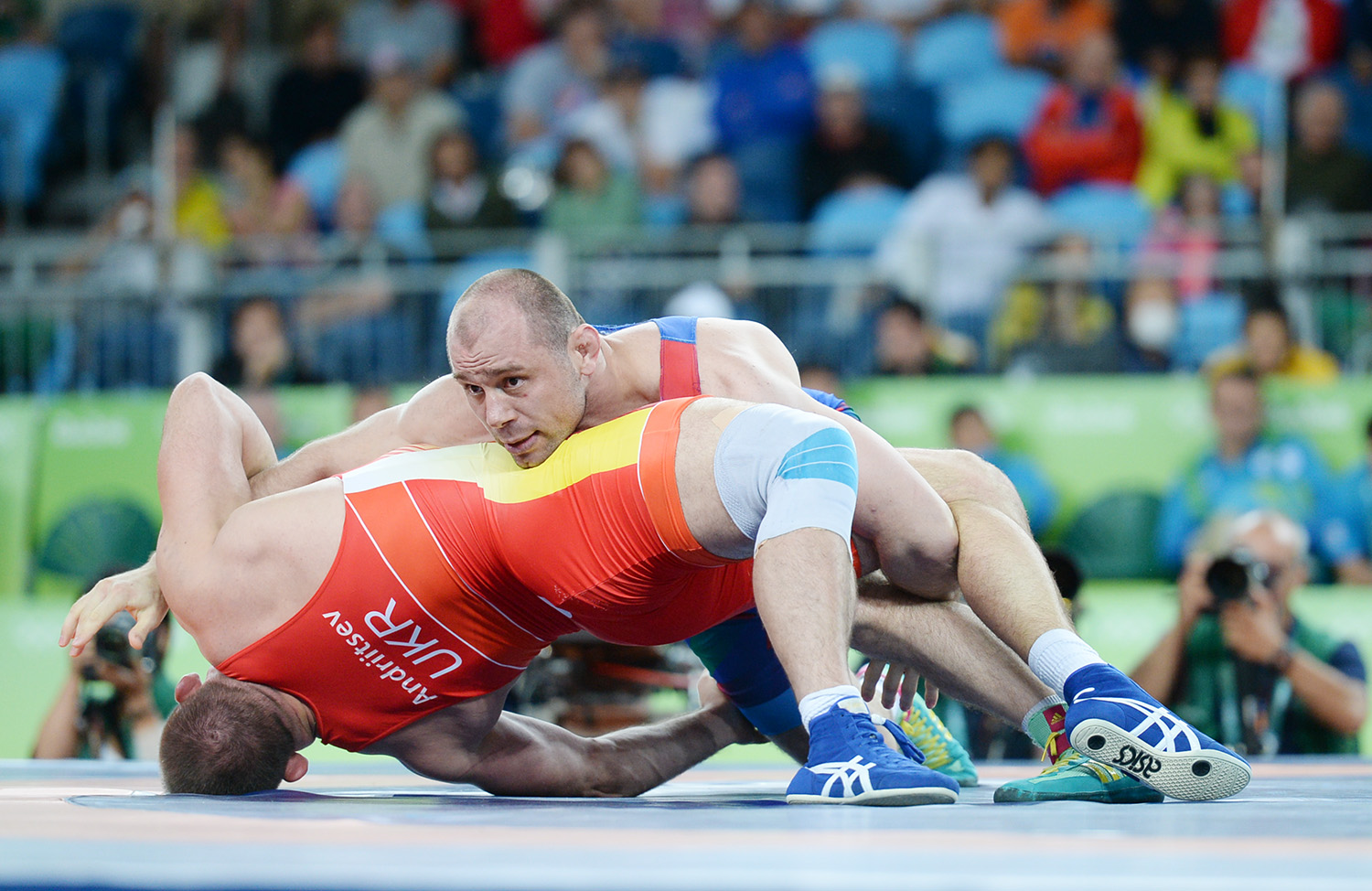
Nikolai Andrianov posted 15 medals with seven golds from 1972 to 1980, his vault and parallel-bars routines showcasing power output and aerial awareness refined under high-repetition training protocols. Andrianov’s achievements during the Soviet Union’s dominance of Olympic gymnastics illustrate how state-sponsored athletic programs could systematically develop elite performers through centralized coaching, scientific training methodology, and continuous technical innovation. His parallel-bars work in particular became a template for subsequent generations of male gymnasts.
More recent contributors include Carl Lewis with 10 medals, nine gold, spanning 1984 to 1996 in long jump and sprints, where horizontal force application and takeoff angles optimized jump distances. Lewis’s combination of sprinting and jumping excellence—rarely achieved simultaneously at elite levels—required dual-specific training addressing both maximal velocity development and explosive power. His longevity across four Olympic Games (1984-1996) placed him among track and field’s most durable performers and demonstrated the effectiveness of systematic strength training in extending athletic careers.
Alexei Nemov earned 12 medals in 1996 and 2000 through floor routines that balanced artistic expression with biomechanical efficiency in tumbling sequences. The kinesiological data tells an interesting story here as well: adaptation to rule changes and rising global depth required progressive overload in both physical and cognitive domains. Nemov’s dominance in floor exercise—a discipline emphasizing strength, power, and coordination—reflected the evolutionary sophistication of men’s gymnastics training by the 1990s, incorporating sports science methodologies unavailable to earlier generations.
Career statistics reinforce these trends. Phelps’s 16 individual golds contrast with Latynina’s participation across 18 events in three Olympics, while Mangiarotti’s 13 medals spanned team and individual formats. Championship peaks, such as Phelps’s eight golds at Beijing 2008 and Latynina’s six medals at Tokyo 1964, coincide with periods of peak physiological readiness. Comparative analysis shows swimming and gymnastics account for seven of the top 10 due to event multiplicity, whereas athletics athletes like Nurmi and Lewis succeeded despite narrower per-Games opportunities. This structural difference highlights how sport architecture influences medal accumulation potential—swimming’s 32 medal events and gymnastics’s apparatus and all-around combinations create exponentially greater opportunities for medal acquisition than track and field’s more limited event slate.
Training volumes consistently exceeded 30 hours weekly, paired with mental conditioning to manage final-round pressure. The psychological demands of competing across multiple events, managing expectations, and maintaining focus across extended competition schedules represent underappreciated dimensions of these athletes’ success. Elite performers in this cohort invariably demonstrated exceptional mental resilience, maintaining performance consistency across preliminary rounds, semi-finals, and finals—a cognitive achievement as significant as their physiological adaptations.
Key performance indicators include Phelps’s record 28 total medals, Latynina’s status as the leading female with 18, and a combined total exceeding 140 medals across the group. Longevity—most appearing in at least four Olympic cycles—emerges as a decisive variable, allowing cumulative physiological adaptations to compound across careers. These athletes exemplify how targeted biomechanics, periodized training physiology, and event-specific metrics define sustained Olympic dominance. The persistence of this cohort across multiple decades, despite evolving competition levels and training methodologies, underscores the fundamental principle that Olympic greatness derives from the systematic optimization of talent, opportunity, and sustained dedication across extended careers.

