
Biography of Usain Bolt Sprinting Achievements
nn
Usain Bolt’s sprinting career offers a compelling case study in how exceptional biomechanics, physiological adaptations, and consistent training loads can produce record-breaking performances. From his origins in rural Jamaica to his status as the fastest human ever recorded, the data on his 100m and 200m times, combined with Olympic and World Championship results, highlight a rare convergence of talent and preparation that continues to set benchmarks for elite sprinters.
nn
Early Life and Rise to Prominence
nn
Bolt was born August 21, 1986, in Sherwood Content, Jamaica. As a youth he competed in cricket and football before shifting focus to track, where his speed stood out in school events against older competitors. By his mid-teens he had already posted national junior records. From a sports science perspective, this early exposure likely supported the development of fast-twitch fiber recruitment patterns that later translated directly to sprint performance.
nn
His early coaches recognized his natural ability and worked to channel his athletic gifts into structured sprint training. Growing up in Jamaica, Bolt benefited from the country’s strong sprinting culture and tradition of excellence on the track. The Caribbean island has produced numerous world-class sprinters, creating an environment where elite coaching methodologies and training philosophies were readily available. This cultural context provided Bolt with both competitive peers and experienced mentors who understood the demands of international-level competition.
nn
Transition to Professional Sprinting
n nn
nn
nnn
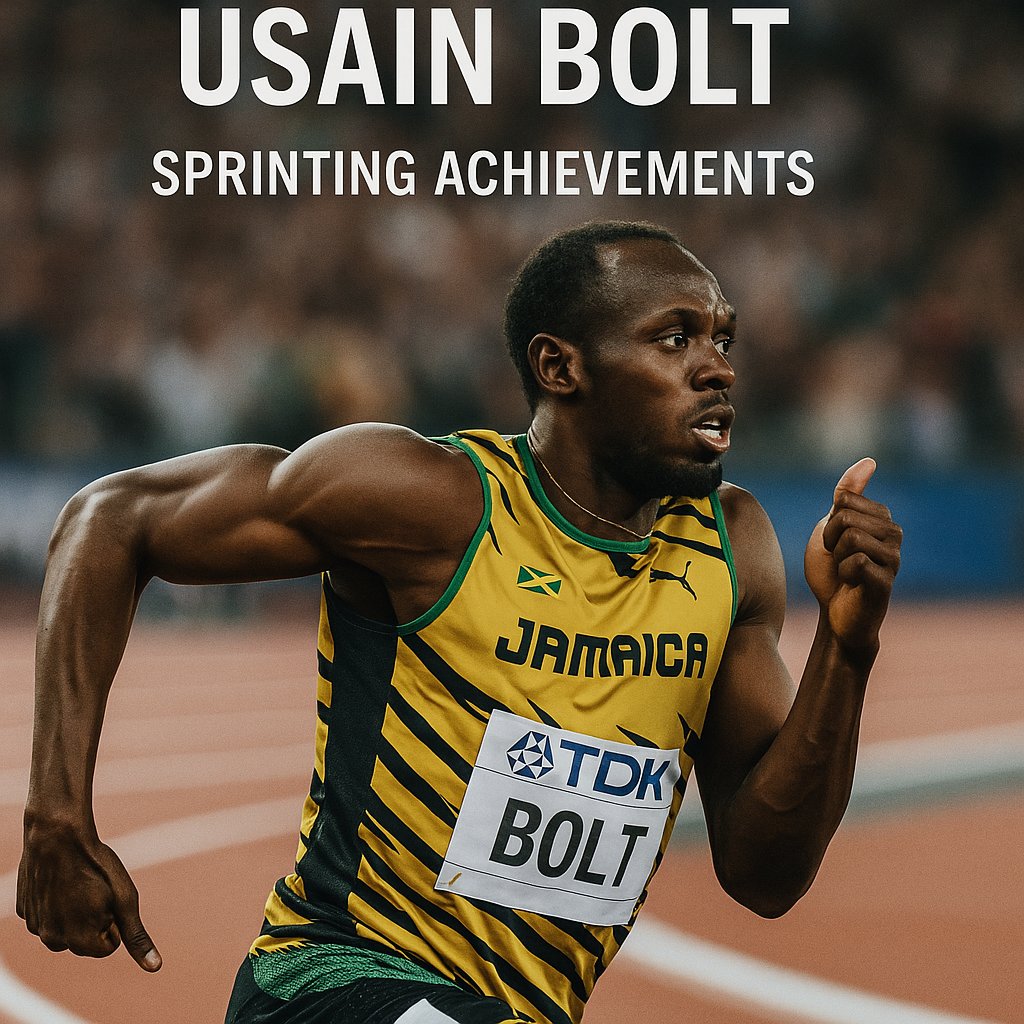
He turned professional in 2004 and began competing at the CARIFTA Games and regional meets. At 6 feet 5 inches, his height initially appeared atypical for a sprinter, yet the kinesiological data tells an interesting story here: longer levers contributed to greater stride length, offsetting any potential disadvantages in stride frequency. Early injuries required adjustments in training physiology, including progressive overload protocols that strengthened his posterior chain and improved force application during the drive phase.
nn
During this developmental period, Bolt made strategic decisions about which events to prioritize. While many tall sprinters focus on the 400m or longer distances, Bolt and his coaching staff recognized that his explosive power and acceleration capabilities made him exceptionally suited to the 100m and 200m. This specialization proved crucial to his later dominance. His training regimen was meticulously designed to maximize power output while maintaining the neuromuscular coordination necessary for explosive starts and sustained velocity.
nn
One of the lesser-known aspects of Bolt’s rise was his attention to technical refinement. Despite possessing elite-level natural speed, he worked consistently on his running mechanics—particularly his block starts, acceleration phase, and transition to maximum velocity. This technical precision allowed him to convert his physical gifts into measurable competitive advantage. Video analysis of his races across different eras shows remarkable consistency in his approach to the acceleration phase, demonstrating the value of ingrained technical mastery.
nn
Olympic Glory and World Records
nn
The 2008 Beijing Olympics represented a clear inflection point. Bolt claimed the 100m gold in 9.69 seconds and the 200m in 19.30 seconds, both world records, then anchored Jamaica to victory in the 4x100m relay. Peak velocity measurements from that era approached 27.8 mph, illustrating optimized ground reaction forces and minimal braking during the transition from acceleration to maximal speed phases.
nn
These performances marked Bolt’s emergence as not merely an elite sprinter, but a transcendent talent capable of redefining the sport’s performance standards. The 9.69-second 100m in Beijing shattered the previous world record by 0.13 seconds—a massive margin at the elite level where improvements are measured in hundredths of a second. Significantly, Bolt achieved this mark despite false-starting and having to recover to peak performance during the race itself, suggesting even greater untapped potential.
nn
His 200m performance that same year demonstrated equal mastery of the longer sprint. The 19.30 seconds represented a nearly flawless execution of pacing strategy, with Bolt building his advantage through the curve and home straight. Analysis of his 200m technique reveals a distinctive ability to maintain forward lean and driving force through the final 50 meters—a phase where many sprinters decelerate significantly. This consistency across both sprint distances differentiated Bolt from historical sprinters who typically excelled at one or the other.
nn
London 2012 and Rio 2016 Dominance
nn
In London he lowered the 200m record to 19.19 seconds while repeating the 100m and relay wins. By Rio 2016 he had secured three additional golds, becoming the first sprinter to complete the sprint triple three times in succession. Training physiology metrics across these cycles show sustained power output and recovery efficiency that allowed him to maintain elite performance despite increasing chronological age and cumulative training stress.
nn
The London 2012 performance was particularly noteworthy because it demonstrated Bolt’s continued improvement even as he entered his mid-twenties. Rather than plateauing—which is common even among elite athletes—he lowered his 200m world record by an additional 0.11 seconds. This continued progression over multiple Olympic cycles suggests a training system that successfully managed fatigue, prevented injury, and allowed for ongoing technical and physiological optimization.
nn
By the Rio 2016 Olympics, Bolt was 30 years old, an age when most elite sprinters have either retired or experienced significant performance decline. Yet he won the 100m, 200m, and anchored the relay to gold once again. This achievement across three consecutive Olympic Games—each separated by four years of cumulative stress, competition, and aging—stands as perhaps his greatest accomplishment. The consistency required to maintain world-class performance over a 12-year span at the highest level of competition speaks to the effectiveness of his training methodology, mental resilience, and physical durability.
nn
World Championships Success and Retirement
nn
Bolt earned 11 World Championship golds from 2007 to 2015. His 9.58-second 100m mark from Berlin 2009 remains the current world record. The consistency of these outputs under competitive pressure underscores refined neuromuscular coordination and race-specific pacing strategies. After retiring in 2017 he moved into business and philanthropy, occasionally running exhibition events. Career totals include eight Olympic golds, a fastest relay split of 8.70 seconds, and a 400m personal best of 45.28 seconds.
nn
The Berlin 2009 World Championships where Bolt set his 9.58-second world record represents perhaps the apex of his career. This performance occurred at a time when he was in his prime competitive years, fully developed physically, and executing at peak technical proficiency. The race itself demonstrated his characteristic blend of explosive acceleration, smooth transition to maximum velocity, and powerful maintenance of speed through the final phase. No sprinter has come within 0.04 seconds of this mark in the years since, underlining its significance as a benchmark of human sprinting capability.
nn
Bolt’s retirement in 2017 was announced during the London World Championships, bringing closure to one of sport’s most dominant careers. His decision to retire while still capable of winning races demonstrated both confidence in his legacy and respect for the sport itself. Rather than fading away through declining performances, he chose to exit on his terms, having secured his place as the undisputed greatest sprinter in history.
nn
Key Facts and Statistics
nn
- n
- World record in 100m: 9.58 seconds (Berlin, 2009)
- World record in 200m: 19.19 seconds (London, 2012)
- 8 Olympic gold medals across three Games
- 11 World Championship gold medals
- Fastest 100m split in relay: 8.70 seconds
- Personal best in 400m: 45.28 seconds
- Named IAAF Athlete of the Year multiple times
- Inducted into the IAAF Hall of Fame in 2022
- Over 20 sub-10 second 100m performances
- Coached primarily by Glen Mills throughout career
- Represented Jamaica in 4x100m and 4x400m relays
- Peak top speed recorded at 27.8 mph
- Collected 20 major championship golds total
n
n
n
n
n
n
n
n
n
n
n
n
n

